

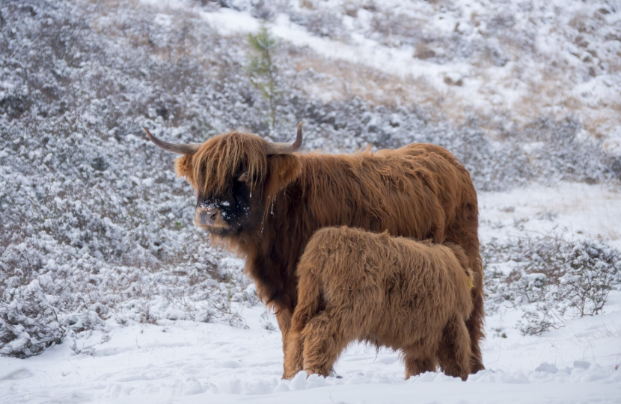
Bringing home a Miniature Highland cow is a dream for many hobby farmers and homesteaders. Famous due to their iconic fluffy coats, docile nature, and manageable size, these bovines are practical as much as they are pretty.
However, because they have surged in popularity, finding a healthy, well-bred animal requires more than just a quick search.
Below are five tips to help you identify the best Miniature Highland for your space. Let’s check them out…
1. Put Conformation and Health First, Not Cuteness
While it is easy to be distracted by a fuzzy calf, the “best” Miniature Highland is one that is structurally sound.
Search for a straight back, strong legs, and a clear and alert gaze. A good breeder will work on conformation that ensures the animal moves comfortably and has a long, productive life.
Ensure the animal is current on vaccinations and has been dewormed regularly. A healthy coat should be thick and free of bald patches or skin irritations, indicating good nutrition and care.
2. Verify the Bloodline and Registration
The term “miniature” can be subjective. To be certain you are acquiring a real Miniature Highland, seek registration papers with well-known breed associations.
These documents include a lineage history and confirm that the animal has met certain height requirements. When searching for a miniature highland for sale, always ask the seller about the parents’ registration status.
An experienced breeder will be open about the animal’s pedigree and must be able to provide the chondrodysplasia status, a genetic characteristic that can influence height.
Knowing the genetic background helps you avoid unexpected health issues and ensures the animal will stay within the size range you expect.
3. Evaluate the Breeder’s Environment
The best way to judge the quality of a Miniature Highland is to see where it was raised. Preferably, go to the farm.
Check the neatness of the stalls, the grass, and the temper of the rest of the cattle on the farm. Cows raised in a high-stress or overcrowded environment may develop behavioral issues.
A breeder who allows their calves to socialize with humans from a young age will produce a much more docile and friendly companion for your family.
4. Ask About “Bovine Personalities”
Miniature Highlands are known for their docility, but each individual has a unique personality. Some are naturally bold and curious, while others are shy and reserved.
Discuss your goals with the breeder—whether you want a “pasture pet” that will eat out of your hand or a show-quality animal. A good breeder knows their herd well enough to match the right cow to the right owner.
5. Plan for Transportation and Aftercare
Finding the right cow is only half the battle; getting it home safely is the other half. Specialized livestock transporters are usually recommended or assisted by the best breeders. Moreover, make sure that the breeder is ready to offer after-sales support.
A reliable professional will be available to answer questions about diet, grooming, and fencing long after the animal has arrived at your farm.
